How to Invest in Crypto as a Complete Beginner Without Losing Your Shirt
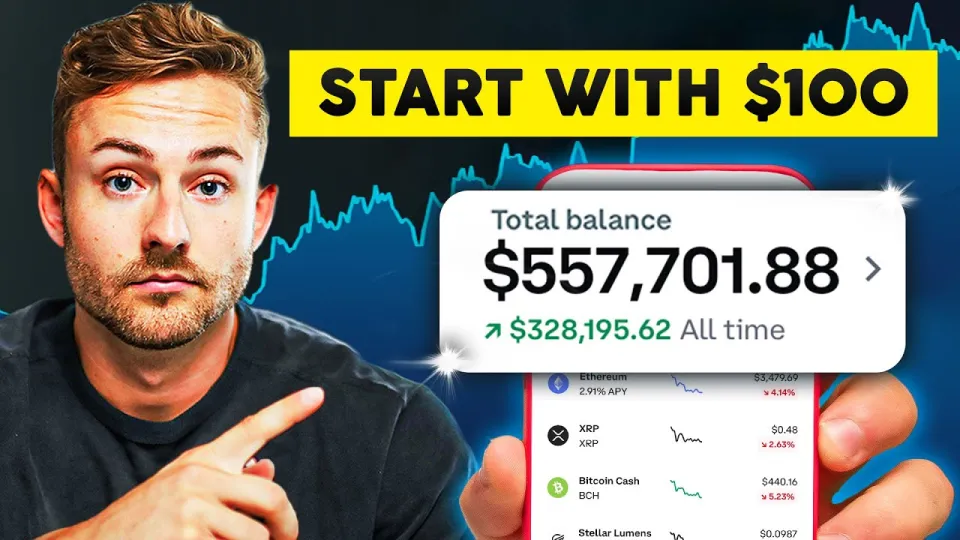
Video: How To Invest in Crypto as A COMPLETE Beginner [2025 GUIDE]
You can order the same kind of articles for your own video to boost it on YouTube and Google. Just message the Telegram bot @sat_sit_bot. The bot writes and publishes the articles itself (with your YouTube video embedded) on popular topical websites (no ads). Your first 50 articles are free.
· based on the channel Craig Percoco
To invest in crypto as a complete beginner, treat it as a high-risk emerging market rather than a lottery ticket: learn the basics, buy only with risk capital, split research into fundamentals and technicals, and follow a written plan with position sizing and a journal. That single sequence is what separates people who survive their first cycle from those who get wiped out in it.
Craig Percoco, who has spent about seven years trading and investing, built his beginner guide around exactly this idea — that crypto can create generational wealth, but only for people who treat it like a skill instead of a bet. If you want a free starting point for learning trading mechanics, you can start learning trading for free before you put a single dollar at risk.
What crypto actually is and why beginners keep coming back
Crypto is a market of digital assets recorded on blockchains — public ledgers that track ownership without a central authority — and its appeal for a beginner is the combination of high volatility and genuinely new technology. Bitcoin, launched in 2009, was the first; Ethereum followed in 2015 and added programmable smart contracts, which is why thousands of tokens now exist on top of it.
The upside argument is simple: crypto is still small relative to equities, gold or real estate, so the same dollar of inflow moves prices far more than it would in a mature market. That cuts both ways. A market that can double in months can also fall 70% and stay down for a year, which is why the first rule of investing in cryptocurrency is that the money you use must be money you can afford to lose completely.
The four things to learn before you buy anything
Before you open an exchange account, cover these four basics so you understand what you own.
- Blockchain vs. coin vs. token. A blockchain is the network; a coin (BTC, ETH) is the native asset of that network; a token is an asset issued on top of someone else's chain.
- Custody. Coins held on an exchange are held by the exchange. A hardware wallet puts the private keys in your hands, which removes counterparty risk but adds the risk of losing your seed phrase.
- Market structure. Crypto trades 24/7 across hundreds of venues, with no closing bell and no circuit breakers, so moves happen faster than in stocks.
- Liquidity. Thin order books on small altcoins mean wide spreads and slippage — a 5% move against you can become 8% after fees and fills.
How to research a coin with fundamentals
Fundamentals answer one question: does this asset deserve to exist in five years? For a beginner, four data points do most of the work.
- Tokenomics. Look at total supply, circulating supply, inflation schedule and unlock dates. A token with a large share unlocking next quarter has a structural seller waiting to hit the market.
- Use case and real usage. Active addresses, fees paid and total value locked tell you whether anyone actually uses the network, not just talks about it.
- Team and funding. Who built it, who backs it, and have those backers sold? Anonymous teams are not automatically bad, but they raise the bar for evidence.
- Competition. Most tokens solve a problem three other projects already solve. Ask what makes this one different beyond marketing.
A useful filter: if you cannot explain the token's value in two sentences to a friend who knows nothing about crypto, you are not ready to buy it.
How to use technicals without pretending to predict the future
Technicals do not tell you whether a coin is good — they tell you where buyers and sellers previously agreed on price, and that is enough to plan an entry and an exit. Three tools cover most of what a beginner needs.
- Trend and structure. Higher highs and higher lows mean an uptrend; buying into a clean downtrend is how most new accounts get destroyed.
- Support and resistance. These are the price zones where the market has repeatedly turned. They are where you plan entries, not where you guess.
- Volume. A breakout on no volume is usually a trap. A move confirmed by volume has participation behind it.
Charts are drawn on platforms like TradingView, where a free account is enough to start marking levels on Bitcoin and Ethereum daily candles before touching smaller altcoins.
How beginners actually make money in crypto
There are two realistic paths, and most beginners should start with the first one. Investing means buying a small number of large, liquid assets — Bitcoin and Ethereum cover the majority of the market's value — and holding through the cycle with a plan to take profits in tranches. Trading means taking shorter positions around technical levels, which requires more screen time, stricter risk rules and a much higher tolerance for being wrong.
Either way, the mechanics that keep you alive are the same:
- Risk no more than 1–2% of your account on a single trade, so a losing streak of ten trades is annoying rather than fatal.
- Decide your exit before your entry — both the profit target and the point where you admit you were wrong.
- Take partial profits on the way up instead of waiting for a perfect top that almost nobody catches.
- Accept that most of your gains will come from a handful of decisions, and the rest of the work is not losing them back.
How to buy, store and organize your crypto
Buying is the easy part: register on a regulated exchange, complete identity verification, deposit fiat and place a limit order rather than a market order to avoid paying the spread. Beginners often start with a major exchange such as Coinbase for simplicity, or a derivatives-focused venue like Bybit for more advanced tools — but leverage is not a beginner feature, and futures can lose more than your initial deposit.
After the purchase, storage and record-keeping matter more than most people expect:
- Move long-term holdings to a hardware wallet and back up the seed phrase offline, never in a photo or cloud note.
- Keep a spreadsheet or journal of every buy and sell: date, asset, size, reason and result. It is the only way to find out which of your decisions actually work.
- Track taxes from day one — most jurisdictions treat crypto disposals as taxable events, and reconstructing a year of trades later is painful.
- Set a routine: a fixed day each week to review positions, not a habit of checking prices every hour.
Beginner questions that come up again and again
Underneath every beginner video there is the same set of doubts, and they are worth answering directly. People ask whether they need a mentor — a structured course or community shortens the learning curve, but no one can hand you discipline. They ask why their small trades keep failing — usually because position sizing is too small to matter and stops are too wide to survive normal volatility. They ask how much they should start with — an amount where a total loss changes nothing about your rent, your savings or your sleep. And they ask whether they are too late — crypto has had multiple 70–80% drawdowns and multiple recoveries, so timing matters far less than whether you are still solvent when the next opportunity arrives.
Be skeptical of anyone promising a fixed weekly return, a guaranteed multiplier or a private mentor who turns small accounts into six figures on a schedule. Those claims appear constantly in comment sections and they are the most reliable sign of a scam in this market.
Useful links
- Start learning trading for free
- Crypto trading course and private team
- Discord community access
- All resources
- TradingView charting
Bottom line
Investing in crypto as a beginner is less about picking the perfect coin and more about building a process you can repeat: learn the basics, size positions so you survive mistakes, research fundamentals before charts, and write down every decision. Craig Percoco's beginner guide is a useful starting framework because it treats crypto as a market to be studied rather than a shortcut to wealth, and it puts organization and risk control ahead of hype. Start small, keep records, and let the first cycle teach you before you scale up — the free trading resources at https://bit.ly/3VHSOeT are a reasonable place to begin.
Key takeaways
- Start with only risk capital — money you can lose entirely without changing your life.
- Learn the basics first: what a blockchain is, what Bitcoin and Ethereum do, and how exchanges and wallets differ.
- Separate fundamentals (tokenomics, supply, use case, team) from technicals (price charts, trends, entries).
- Write a plan before buying: position size, entry, target and stop, plus a journal for every trade.
- Craig Percoco's beginner guide frames crypto as an emerging market with big upside but stresses organization and risk control over hype.
Source: How To Invest in Crypto as A COMPLETE Beginner [2025 GUIDE] · Markdown version
Questions & answers
How much money do I need to start investing in crypto?
There is no minimum, but the right amount is money whose complete loss would not affect your bills, emergency fund or sleep. Many beginners start with a small sum they can afford to lose entirely while they learn how the market moves, then increase size only after a few months of consistent process.
Do I need a mentor or paid course to trade crypto?
Not strictly, but structure helps. A course or community can shorten the time it takes to learn risk management, chart reading and journaling, while a mentor cannot supply discipline for you. Whatever you choose, verify claims and avoid anyone guaranteeing fixed returns.
Why do small trades keep failing for beginners?
Usually it is position sizing and stops rather than bad luck. If the position is too small to matter, the temptation is to use wide stops or no stop at all, and normal volatility then wipes the trade out. Define risk per trade, typically 1–2% of the account, before entering.
Is it too late to invest in crypto?
Crypto has already survived several drawdowns of 70–80% followed by recoveries, so entry timing matters less than staying solvent and informed. The bigger risk for beginners is buying hype at the top without a plan, not arriving after the first bull run.