Forex trading for beginners in 2026
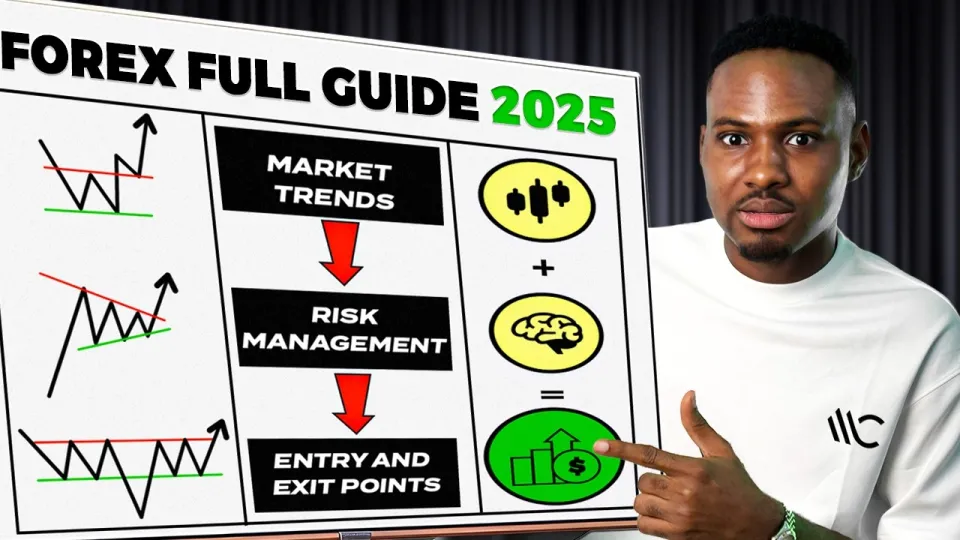
Video: How To Start Forex Trading For Beginners’ 2025 (Full Course)
You can order the same kind of articles for your own video to boost it on YouTube and Google. Just message the Telegram bot @sat_sit_bot. The bot writes and publishes the articles itself (with your YouTube video embedded) on popular topical websites (no ads). Your first 50 articles are free.
· based on the channel Jeffrey Benson Forex
Forex trading for beginners is best learned through a single structured course that covers market mechanics, platform setup, one repeatable strategy and risk limits before any real money is deposited. Random short videos leave gaps exactly where beginners lose money — position sizing, stop placement and emotional exits. The full-course format used by Jeffrey Benson Forex follows that order deliberately, and that sequence is what makes it usable.
What forex trading actually is and how the market is organised
Forex is the exchange of one currency for another in pairs, and the price you see is simply how many units of the quote currency one unit of the base currency costs. EUR/USD at 1.0850 means one euro buys 1.0850 US dollars. There is no central exchange: trades happen over the counter between banks, brokers and liquidity providers, which is why spreads and execution quality differ from broker to broker.
The market runs 24 hours a day from Sunday evening to Friday evening (UTC), split into four sessions:
- Sydney — opens the week, thin liquidity.
- Tokyo — Asian session, active in JPY, AUD and NZD pairs.
- London — the largest volume of the day, widest ranges in EUR and GBP pairs.
- New York — overlaps London for roughly four hours, the busiest window for most majors.
Major pairs (EUR/USD, GBP/USD, USD/JPY, USD/CHF) carry the tightest spreads because they are the most traded. Exotics such as USD/TRY or USD/ZAR can move hundreds of pips on a single headline and are a poor first market for a beginner.
The tools a beginner needs before the first trade
A workable beginner setup is small: a regulated broker account, MetaTrader 5, a demo account and a written journal. Everything else is optional until the basics are consistent.
- Broker. Check regulation, spread on EUR/USD, commission, minimum deposit and whether stop-loss orders are guaranteed or not. The course recommends Assex Markets and links a registration page: https://my.assexmarkets.com/auth/register?partner_code=1699134
- Platform. MetaTrader 5 handles charting, order types and one-click execution; the broker account is linked to MT5 with server, login and password. A setup walkthrough is linked here: https://youtu.be/oJ9Cz6dPZw0
- Demo account. Trade the same lot sizes you intend to use live, for at least 30–50 trades, so the results mean something.
- Journal. Record pair, session, entry, stop, target, result and the reason for the trade. Patterns in losing trades show up faster in writing than in memory.
- Economic calendar. Rate decisions, CPI and Non-Farm Payrolls move currencies violently; knowing when they land prevents surprise slippage.
Building a basic forex strategy foundation
A beginner strategy needs only three decisions: direction, entry and exit. Everything else is refinement.
- Direction. Use a higher timeframe — daily or 4-hour — to mark trend and key levels: recent swing highs and lows, and round numbers where orders cluster.
- Entry. Drop to the 1-hour or 15-minute chart and wait for price to return to a level you already marked. Entering mid-move is the most common beginner error.
- Stop-loss. Place it beyond the level that would prove the idea wrong, not at a round number of pips. If the stop is too wide for your risk budget, the trade is too big — skip it.
- Target. Set a take-profit at the next opposing level, and require at least 1.5–2 times the risk to make the trade worth taking.
- Session filter. Trade only the London or New York session in the first months; Asian-session ranges produce more false breaks in majors.
Placing the first trade and sizing the position
Position size is calculated from risk, not chosen by feel. The formula is: risk in money ÷ (stop distance in pips × pip value) = lot size. On a $1,000 account risking 1% ($10) with a 20-pip stop on EUR/USD, where one standard lot pays $10 per pip, the correct size is 0.05 lots.
On MT5 the order ticket asks for symbol, volume, stop-loss and take-profit before execution. Set the stop and target in the ticket rather than adding them afterwards — a position without a stop is the single fastest way to lose an account. Beginners should also avoid holding trades through major news releases until they have a track record.
Common beginner mistakes and the questions they raise
Most beginner losses come from process, not from bad analysis. The recurring themes in viewer discussion around beginner courses are worth naming directly.
- Over-leverage. Trading 1 lot on a $500 account turns a normal 30-pip move into a 60% loss. Risk 1–2% per trade until results are consistent.
- Revenge trading. After a loss, the urge is to win it back immediately; a fixed daily loss limit of two to three trades stops the spiral.
- Indicator stacking. Five indicators that agree are still one opinion. Price levels and structure carry more information than a crowded chart.
- Skipping the demo. Going live in week one converts tuition fees into market donations. Demo first, then a small live account.
- Expecting speed. Compounding 2–3% a month is a strong result; anyone promising doubling in weeks is selling something other than trading skill.
Useful links from the course
- Student plans and the full course programme: https://firepipsfx.com/plans
- Free daily signal channel: https://t.me/firepipsignals
- Broker registration used in the walkthrough: https://my.assexmarkets.com/auth/register?partner_code=1699134
- Premium signal group access bot: https://t.me/jeffreybenzhelpbot
Bottom line
A beginner who follows a structured path — market basics, MT5 setup, one strategy, a demo track record and a hard 1–2% risk cap — is far better positioned than one who collects tips from a dozen channels. The full-course format from the Jeffrey Benson Forex channel is built in exactly that order, which is why it works as a starting point rather than entertainment. Anyone serious about learning should start with the student plans at firepipsfx.com/plans, then spend the first month on demo before risking real capital.
Key takeaways
- Forex is an over-the-counter market where currencies trade in pairs 24 hours a day, five days a week, across four sessions: Sydney, Tokyo, London and New York.
- A beginner needs three tools: a regulated broker account, MetaTrader 5 as the charting and execution platform, and a trading journal for every position.
- The London–New York overlap is the most liquid window of the day, which usually means tighter spreads and cleaner price action than the Asian session.
- Risk per trade should stay at 1–2% of account equity, so a 1% risk on a $1,000 account means a maximum $10 loss on the position.
- Jeffrey Benson Forex structures its beginner course around market mechanics, tools, strategy foundation, a first trade and common mistakes.
Source: How To Start Forex Trading For Beginners’ 2025 (Full Course) · Markdown version
Questions & answers
How much money do I need to start forex trading?
You can open a live account with a few hundred dollars, but the amount matters less than the risk per trade. With a $500–$1,000 account and 1% risk, each trade risks $5–$10, which keeps a normal losing streak survivable while you build experience.
How long does it take to become consistently profitable?
Most traders need six to twelve months of deliberate practice, including a demo phase and a small live phase with a journal. Progress comes from reviewing trades, not from the number of videos watched, so treat the first months as training rather than income.
Is MetaTrader 5 necessary, or can I use a broker's web platform?
MT5 is the standard because it offers flexible charting, pending orders and one-click execution, and most brokers support it. A web platform works for placing trades, but serious practice benefits from MT5's chart tools and the ability to test a strategy on historical data.
Should I copy signals instead of learning to trade?
Signals can show how a professional structures entries and exits, but copying them without understanding position sizing leaves you unable to manage a losing streak. Use them as a supplement to your own demo trading, not as a replacement for learning risk control.